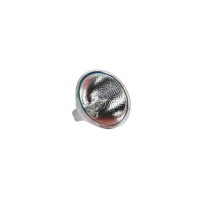
As a replacement component for the Rexim RM-130 (commonly supplied by Interlight under SKU WW-EFQ9-8), this is a specialized incandescent or halogen lamp assembly, often used in avionics, medical, or industrial equipment. Ensuring its reliability and quality requires a tailored approach that acknowledges its electromechanical nature and typical application environments. This guide outlines critical practices for procurement and quality assurance of this component type.
Reliability standards and qualifications relevant to this component are application-dependent. For aerospace or defense, standards like MIL-PRF-22885 for lamps or the general requirements of MIL-PRF-9858 may be referenced. In medical devices, IEC 60601-1 for safety and essential performance is paramount. Crucially, the replacement component should be qualified not just to generic standards, but to the specific performance parameters of the OEM part: voltage, current, luminous intensity, filament design, and base configuration. A qualified component must have a detailed test report verifying it meets all electrical, photometric, and mechanical drawings of the original Rexim RM-130 specification.
Accelerated life testing (ALT) and what the results mean is a cornerstone for lamp reliability. ALT typically involves operating the lamp at elevated voltage (over-voltage stress) to accelerate filament evaporation and failure mechanisms. The Arrhenius model is often applied, where increased temperature exponentially increases the rate of chemical degradation (filament thinning). Results from such testing, when properly modeled, provide an extrapolated estimate of median service life under normal conditions. For you, the key is to request the ALT data from the supplier, focusing on the test conditions (e.g., 115% of rated voltage) and the calculated acceleration factor. This data validates the supplier's design and manufacturing consistency against the known life expectancy of the original component.
Failure rate calculations (FIT rates) and MTBF considerations for incandescent lamps differ from solid-state electronics. The failure rate is not constant; it often follows a distribution where early failures (infant mortality) and wear-out (filament burnout) are dominant. While FIT (Failures in Time) rates of 1e9 hours are less commonly cited, a statistically derived MTBF (Mean Time Between Failures) or more accurately, MTTF (Mean Time To Failure), is critical. This should be derived from life test data. For procurement, require the supplier to provide the calculated MTTF/MTBF with the confidence interval (e.g., 90% confidence) and the test method used. This figure must be compared against the system's maintenance and safety requirements.
Environmental stress screening (ESS) and burn-in procedures are vital for eliminating infant mortality. A standard practice for such lamps is a burn-in at rated voltage for a period (e.g., 24-48 hours). This stabilizes the filament and causes weak units to fail before shipment. ESS may also include thermal cycling to verify the integrity of the seal and base attachment. For high-reliability applications, a 100% burn-in is non-negotiable. The procurement specification should mandate evidence of this screening, such as batch burn-in logs and the associated fallout rate, which is a key indicator of production process control.
Counterfeit detection methods specific to this component type must focus on physical and performance attributes. Physically, scrutinize the glass envelope (clarity, presence of seams), the filament structure (coil pattern, support wires), and the base (markings, plating, construction). Use dimensional inspection against the OEM drawing. Electrically, measure in-rush current and steady-state current; a deviation can indicate a different filament. Photometrically, a simple lumen output check can reveal significant discrepancies. Chemical analysis of the base metal plating can also detect substitutions. Always purchase from authorized distributors or the original manufacturer. For Interlight or similar replacements, verify their authorization and traceability back to their manufacturing source.
Incoming inspection best practices should employ AQL (Acceptable Quality Level) sampling per ANSI/ASQ Z1.4, with tightened inspection for critical parameters. The inspection plan must include: visual examination for workmanship, dimensional verification of the base and overall length, electrical testing (voltage/current/wattage), and photometric testing (if equipment is available). A sample from each lot should undergo a short-term life test (e.g., a few hundred hours) to validate consistency. Crucially, certificates of conformance and test reports from the supplier must be reviewed for compliance with all specified requirements.
Storage and handling requirements to maintain reliability are often overlooked. Lamps must be stored in a climate-controlled environment to prevent corrosion of the base contacts. The original packaging should be maintained to prevent physical shock and vibration, which can damage the filament or its supports. Shelf life, while long, should be considered; older stock may be more prone to seal degradation. Implement FIFO (First-In, First-Out) inventory management. Handling must always use gloves to prevent oils from contaminating the glass envelope, which can lead to hot spots and premature failure when operated.
End-of-life management and obsolescence planning is critical as these specialized lamps are often discontinued. Upon qualification of this replacement, immediately initiate a lifetime buy calculation based on the system's forecasted production and service life. Secure a buffer stock. Furthermore, work with the supplier (Interlight) to obtain a last-time buy notice as far in advance as possible. Investigate and qualify a second-source replacement concurrently. For long-term support, consider the feasibility of LED retrofit kits, though these require extensive requalification for photometric, electrical, and thermal compatibility. Document all qualification data for the replacement component to streamline future audits and alternative component approvals.