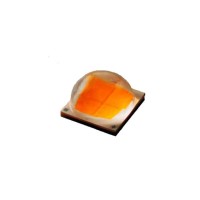
The XLAMP XHP70.3 LED from CreeLED, Inc. is a high-power, multi-die white light-emitting diode (LED) belonging to the solid-state lighting (SSL) component category. Its primary role in electronic systems is as a high-intensity light source, converting electrical energy into luminous flux with high efficiency. It is the core engine in applications demanding robust, bright, and reliable illumination, such as high-performance portable lighting (tactical flashlights, bike lights), automotive auxiliary lighting (off-road light bars), area and architectural lighting, and specialized industrial equipment. As a system component, it requires careful thermal, optical, and electrical management via a dedicated LED driver (constant current power supply), a heatsink, and secondary optics like reflectors or lenses to function effectively and achieve its rated lifetime.
When selecting a high-power LED like the XHP70.3, several key parameters are critical. Luminous flux (output in lumens) and luminous efficacy (lumens per watt) are the primary measures of total light output and electrical efficiency, directly impacting system brightness and power consumption. Correlated Color Temperature (CCT) defines the light's "warmth" or "coolness," while Color Rendering Index (CRI) indicates how accurately it renders colors; the XHP70.3 is available in high-CRI versions (>90) for applications where color quality is paramount. Forward voltage (Vf) and maximum drive current are essential for driver design. Crucially, thermal resistance and the associated junction temperature (Tj) management are non-negotiable; exceeding temperature ratings drastically reduces light output and lifespan. Finally, the package size and footprint (7.0mm x 7.0mm in this case) and the beam pattern of the primary optic (domed or flat lens) influence the mechanical and optical design.
Compared to alternatives, the XHP70.3 Gen 3 sits at the premium end of the high-power LED market. Against previous generations like the XHP70.2, the Gen 3 offers improved efficacy and, notably, more consistent color uniformity and better chromaticity sorting, addressing a common pain point in multi-die packages. Versus competitors like Luminus's SFT70 or Samsung's LH351D, the Cree XHP70.3 generally commands a price premium but is often benchmarked for its proven reliability, high maximum drive current (up to 6A for the high-voltage version), and excellent performance under high thermal stress, a legacy of Cree's silicon carbide technology. In terms of form factor, the large 7x7mm footprint and high total output differentiate it from smaller, single-die LEDs (e.g., Cree's own XM-L3) that are easier to thermally manage but cannot match the total lumen output. Cost-wise, it is more expensive per component than mid-power LED arrays but offers superior flux density, often resulting in a lower system cost for a target lumen output when optics and assembly are considered. Availability is generally good through major distributors, though specific chromaticity bins may have longer lead times.
Industry trends significantly impact this component category. The relentless drive for higher efficacy continues, pushing components like the XHP70.3 to deliver more lumens per watt, reducing energy consumption and thermal load. There is also a strong trend toward improved color quality and consistency, with high-CRI and tight-bin offerings becoming standard for professional applications. Miniaturization and increased flux density allow for more compact, yet brighter, luminaires. Furthermore, the industry is adapting to new phosphor technologies and package designs that offer better chromaticity maintenance over lifetime and temperature. Finally, the rise of smart and connected lighting places greater emphasis on the LED's stability and dimming performance when paired with complex drivers and control systems.
You should choose the XLAMP XHP70.3 Gen 3 LED when your design requires a balance of very high total lumen output, high efficiency, and superior color quality in a single, robust package. It is an ideal choice for premium portable lighting where runtime and brightness are key, for architectural lighting demanding high CRI, and for any application where thermal management is challenging but high output is non-negotiable. Its high-voltage versions (12V or 24V) can simplify driver design in automotive or battery-powered systems. Choose an alternative like a mid-power LED array if your design is extremely cost-sensitive, has severe space constraints for the LED footprint (though not necessarily the overall heatsink), or requires a very wide beam angle without secondary optics. Opt for a smaller single-die LED if your drive current is below 3A and you prioritize a simpler thermal design or a smaller hot-spot.
From a procurement standpoint, several considerations are vital. While the XHP70.3 is a current-generation part with healthy stock at major distributors, lead times for specific flux/color bins (like the 0D0HM40E1) can vary from stock to several weeks. Always verify the lifecycle status; as a Gen 3 product, it is actively marketed and manufactured, but it is prudent to check for any impending end-of-life notices, especially if considering the older XHP70.2. A significant procurement consideration is the lack of a true second-source, form-fit-function equivalent. CreeLED (now part of SMART Global Holdings) holds the foundational patents for this package and chip technology. While Luminus, Samsung, and others offer competing high-power LEDs, they are not pin-for-pin compatible, requiring a board re-spin and optical requalification. Therefore, securing a stable supply through authorized distributors or considering multi-source designs from the outset is crucial for risk mitigation. Always procure based on full bin specification codes to ensure you receive the exact performance and color characteristics your design validation relied upon.