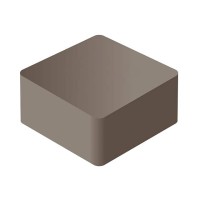
The Bourns SRP5030CA-R33M is a high-current, low-DCR shielded power inductor that exemplifies the ongoing evolution in passive component technology to meet the demands of modern power electronics. At its core, this 330 nH component is engineered using advanced materials and winding techniques to achieve a low DC resistance of just 3.52 mΩ while handling up to 19.2A of saturation current. The technology hinges on a robust, shielded drum core construction, which minimizes electromagnetic interference (EMI) – a critical factor in densely packed boards. Recent innovations in this segment focus on material science, particularly improved ferrite compounds and alloy powders that offer higher saturation flux density and superior thermal stability. This allows for component miniaturization without sacrificing performance, a trend clearly seen in the SRP5030CA's compact 5.3mm x 5.0mm footprint. Enhanced automated manufacturing processes also ensure tighter tolerances and higher reliability, which are non-negotiable in today's applications.
Market demand for components like the SRP5030CA-R33M is being driven overwhelmingly by the proliferation of high-efficiency, high-power-density switch-mode power supplies (SMPS) and voltage regulator modules (VRMs). Key sectors include telecommunications infrastructure (5G base stations), cloud computing and data centers, and automotive electrification. The global push for energy efficiency across all electronic devices creates a persistent need for inductors that minimize I²R power losses, directly translating to the low-DCR specification of this Bourns part. Furthermore, the miniaturization of end products compels designers to seek components that deliver maximum electrical performance in minimal board space, fueling demand for these advanced power inductors.
Supply chain dynamics for such specialized passive components have stabilized somewhat post-pandemic but remain a focal point for procurement teams. While production is global, with key manufacturing hubs in Asia, the United States, and Europe, the supply of raw materials like specific ferrites and metals can be subject to geopolitical and trade tensions. Lead times for this category have normalized from their extreme peaks but can still fluctuate based on sudden demand surges from major sectors like automotive. The pricing outlook is generally stable with a slight upward bias, influenced not by commoditization but by the cost of advanced materials and the energy-intensive sintering processes used in core manufacturing. For high-reliability series like this Bourns part, pricing is also linked to qualification and testing overheads.
Emerging applications are creating new demand vectors. The most significant is the electric vehicle (EV) market, where components like the SRP5030CA-R33M are essential in onboard chargers (OBC), DC-DC converters, and battery management systems (BMS). Similarly, renewable energy systems, including solar microinverters and energy storage solutions, require robust, efficient inductors for power conversion. The growth of artificial intelligence (AI) and its insatiable need for computing power is driving innovation in power delivery networks (PDNs) for servers and GPUs, where high-current, low-loss inductors are critical for point-of-load (PoL) regulators.
The technology roadmap for shielded power inductors points toward even higher efficiency and greater integration. We anticipate continued progress in core materials, such as the adoption of amorphous and nanocrystalline alloys, to push saturation currents higher and core losses lower at elevated frequencies. There is also a trend toward "solution-based" offerings, where inductor manufacturers work closely with IC vendors to create optimized, application-specific modules. Furthermore, the need for high-temperature operation, especially in automotive and industrial settings, will drive the development of components capable of reliable performance at 150°C and above. The integration of sensing functionalities, though more long-term, is an area of exploration.
Industry regulations have a profound impact on the design and sourcing of components like this. Compliance with RoHS (Restriction of Hazardous Substances) and REACH is now table stakes, governing material selection and manufacturing processes. For a component specified in automotive or industrial applications, qualifications such as AEC-Q200 are paramount. The Bourns SRP5030CA series is AEC-Q200 qualified, which immediately expands its applicability into automotive systems, a market with stringent reliability and traceability requirements. These regulations and qualifications add layers of validation and documentation but are essential for market access and risk mitigation, effectively creating a bifurcated market between general-purpose and high-reliancy components.
For procurement teams, strategic recommendations are clear. First, develop a multi-sourced strategy for critical components, but prioritize manufacturers like Bourns with a strong track record in quality, documentation, and high-reliability markets. Second, engage in deeper collaboration with engineering teams to understand the application's true needs—sometimes a slightly different value with better availability can be substituted without compromising design integrity. Third, leverage distributor partners for inventory management programs (VMI, consignment) and market intelligence on lead time trends. Finally, factor in the total cost of ownership, which includes not just unit price but the cost of qualification, reliability, and potential production downtime. Securing a stable supply of high-performance inductors like the SRP5030CA-R33M is no longer just a purchasing activity but a key competitive advantage in bringing robust, efficient power products to market.