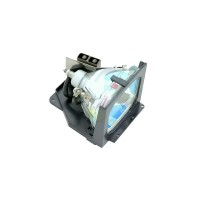
The Interlight 50704-OP is a direct replacement LED driver module designed for specific lamp assemblies. Its primary function is to provide a constant current output to drive an integrated LED array from a standard AC mains input. Successful integration into a new luminaire design requires careful attention to the electrical and physical environment, as this module is intended as a complete subsystem. This note provides guidelines for using this component as the power and control heart of a custom lighting fixture.
Recommended circuit topologies and design best practices: The 50704-OP is a self-contained, non-dimmable AC-DC constant current driver. The recommended topology is therefore straightforward: connect the AC input terminals directly to the rectified mains (typically 120VAC or 230VAC, as per the module's specification) via a fuse and optional switch. The output is connected directly to your LED load. The critical best practice is to ensure the LED load's forward voltage (Vf) at the specified current falls within the driver's output voltage range. Operating at either voltage extreme reduces efficiency and can cause thermal stress or premature failure. Always derate the driver's maximum power by at least 15-20% for reliable long-term operation, and provide a safety margin between the total LED Vf and the driver's maximum output voltage. Treat the module as a sealed unit; do not attempt to modify its internal circuitry.
Component selection guidelines for supporting passives: While the driver is largely complete, external protection components are essential. An appropriately rated fast-acting fuse must be placed in series with the AC hot line, selected based on the driver's maximum input current and inrush characteristics. A metal oxide varistor (MOV) across the AC input is highly recommended for surge suppression, chosen with a clamping voltage suitable for your mains voltage. On the DC output side, while the driver is a current source, a small-value ceramic capacitor (e.g., 100nF to 1µF, rated for the full output voltage) placed directly across the LED load terminals can help mitigate any high-frequency noise and provide a degree of stability for longer wire runs to the LED board.
PCB layout recommendations and routing tips: If integrating the 50704-OP onto a main system PCB, dedicate a specific area for it. Provide robust, wide traces for the AC input lines, maintaining full creepage and clearance distances as mandated by safety standards (typically >3.2mm for 230VAC). Keep the high-voltage AC section physically isolated from the low-voltage DC output section. The connection points from the driver output to the LED load should also use generous trace widths to minimize voltage drop and heating, especially at currents above 500mA. If using wires to connect to a remote LED board, use twisted pairs for the output to reduce magnetic field emissions. Securely mechanically mount the driver module to the PCB or chassis using its provided mounts or adhesive to manage vibration and aid thermal dissipation.
EMC/EMI considerations and mitigation strategies: Switch-mode drivers like the 50704-OP are potential sources of conducted and radiated EMI. The first line of defense is the internal filtering of the module itself. To enhance performance, ensure the AC input wiring is kept short and twisted. The addition of a common-mode choke on the AC input line, before the driver, can significantly suppress high-frequency common-mode noise. Ferrite beads on the DC output lines, close to the driver, can dampen high-frequency ringing. Enclosing the entire driver assembly in a grounded metal housing (the luminaire itself) is the most effective radiated EMI strategy. Ensure all metal parts are bonded to earth ground, and use shielded cables if output wires exceed a few inches in length.
Common design pitfalls and how to avoid them: The most common pitfall is thermal mismanagement. This driver generates heat and must be installed in a fixture with adequate ventilation or heatsinking. Do not pot it in resin or place it in a fully sealed, unvented enclosure. Another critical error is mis-matching the LED load. Connecting an LED string with a Vf too high will cause the driver to operate at its maximum voltage, potentially overheating or shutting down. A Vf too low can lead to overcurrent and LED failure. Always verify the driver's output current matches the LED's rated current. Finally, ignoring safety isolation during prototyping and testing is a severe risk. Always treat the input terminals as live mains voltage even when the fixture is unplugged, as capacitors can hold a charge.
Prototyping tips and bench testing procedures: Begin testing with a variable AC source or a dimmable autotransformer (variac) to slowly bring up the input voltage while monitoring input current with a current probe, watching for abnormal inrush. Use an electronic load in constant voltage (CV) mode to simulate the LED load, setting the voltage to the expected LED Vf. This allows you to verify the output current regulation and efficiency before connecting actual LEDs. When testing with real LEDs, always start with a single LED or a short string to confirm basic operation. Use a thermal camera or thermocouple to monitor the driver case temperature during a prolonged soak test (minimum 2 hours) at maximum ambient temperature to ensure it remains within safe limits. Finally, perform a basic EMI scan using a near-field probe to identify hot spots that may require additional filtering in your final layout.